Pigeon Nets in Bangalore: Make Room for Plants, Laundry and Balcony Chores
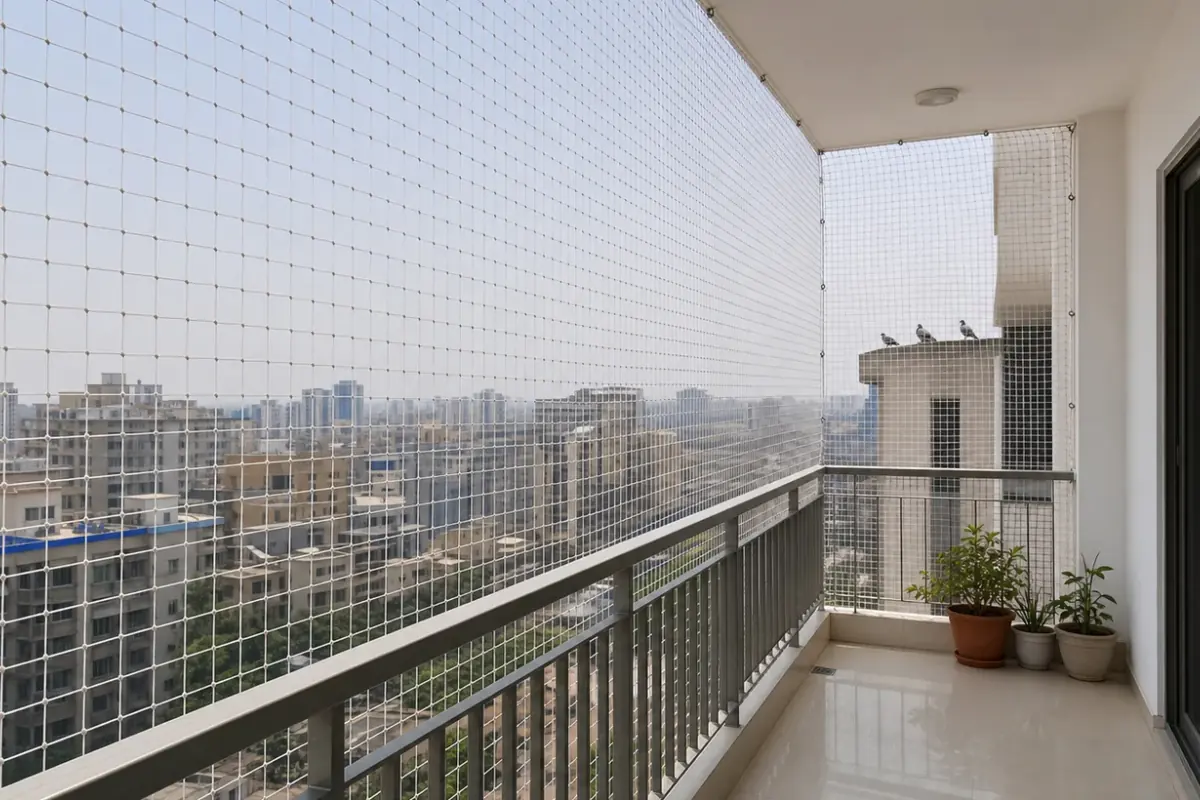
A balcony can be a small garden, a drying area and a storage space within the same day. When pigeons begin using part of it, the temptation is to cover the opening first and sort out the household routine afterward.
For a Bangalore home, it is worth reversing that order. Explain how the balcony works before agreeing where the pigeon net should sit. The aim is to address bird entry while keeping the useful parts of the space accessible.
Arrange the balcony as you normally use it
Before the site discussion, leave the main items in their usual positions where practical. Show the installer the drying rack when it is extended, the door when it is open and the path used to reach the plants.
A photograph of an empty balcony may look clearer, but it can hide a conflict that only appears during a normal chore. Tell the installer which items can move and which need to stay where they are.
A simple sketch can help: mark the open boundary, the main furniture or equipment, and the places people need to reach. There is no need to draw a technical plan.
Give the plants their own conversation
Planters need watering, occasional repositioning and access for clearing fallen leaves. Explain how you handle those tasks and whether any container sits close to the proposed net line.
Keep pots and plant supports independent of the net. Do not assume netting or its fittings are suitable supports for a hanging basket, trellis or growing vine. Ask how plants can be positioned so they do not obstruct the enclosure or make later checks difficult.
Also discuss the route water takes toward the drain. The fitting plan should account for access to the drain and surrounding floor rather than leaving them behind an awkward barrier.
Demonstrate the laundry movement
Laundry uses more space when it is being handled than when everything is folded away. A wall-mounted rack may swing; a portable stand may need turning; a large sheet may require room to spread.
Show that movement during the visit. Ask whether any part would touch the proposed net and whether there will be enough room to remove and replace the rack.
Avoid using the net as an extra clothesline. Treat it as the bird-exclusion system specified by the installer, not as a convenient support for household items.
Identify the chore you do least often
The task that happens twice a year is easy to forget. It might be cleaning behind a unit, repairing a drying mechanism or replacing a damaged window screen.
Mention these occasional jobs before installation. If any requires a change to the enclosure, establish who should handle it and how the net will be restored afterward. Do not plan to cut a temporary opening yourself.
If birds or an occupied nest are already inside the intended boundary, tell the installer before work begins. Do not close birds, eggs or chicks into the enclosure.
Use the handover to try the routine
Once fitting is complete, walk through ordinary tasks from safe positions: open the door, move the drying rack and check access to the plants and drain. Raise any conflict before treating the arrangement as finished.
Pigeon netting is for bird exclusion. It should not be assumed to prevent a person falling, and nobody should lean, climb or hang on it.
For pigeon safety nets in Bangalore, send Eversafe photographs that show the balcony in use. A view containing the plants and drying equipment helps explain the home better than an empty opening alone.
Further reading: Pigeon safety nets for balconies and ducts.
Prepared with AI assistance for Eversafe Safety Nets.


Comments
Post a Comment