Pigeon Prevention for Apartments: Complete Balcony & Home Guide
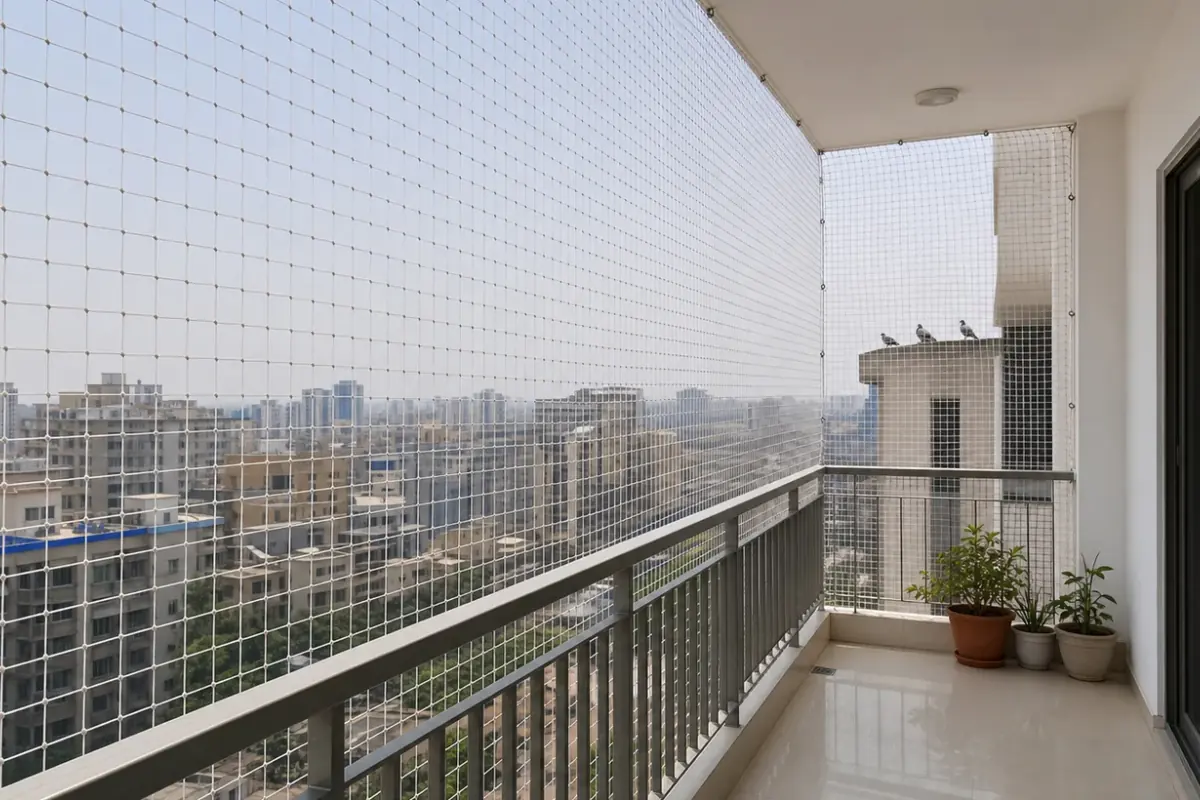
Pigeon Prevention for Apartments: The Complete Balcony, Window, Duct and Terrace Guide
A practical, Guide to understanding why pigeons return, choosing the right barrier, cleaning droppings safely, comparing pigeon nets with bird spikes, and keeping an apartment protected without sacrificing airflow, daylight or the view.
Pigeons do not choose an apartment balcony at random. A dry corner behind an outdoor air-conditioning unit can resemble a sheltered cliff ledge. A railing provides a clear landing line. A leaking drain pipe creates water, while crumbs, grain or pet food provide a predictable meal. Once the birds learn that a place is quiet and dependable, simply chasing them away for a few days rarely changes the pattern. Effective pigeon prevention works by removing the reward and then blocking the exact route the birds use to land, enter, roost or nest.
This guide covers the complete decision from diagnosis to maintenance. It explains when a pigeon net is the strongest solution, when spikes are enough, why reflective objects often stop working, how to approach droppings without creating unnecessary dust, and what apartment owners should ask an installer before approving work. The goal is not to harm birds. It is to create a clean boundary that lets people use their homes while encouraging pigeons to move to a more suitable place.
1. Why pigeons keep returning to apartment buildings
Urban pigeons are descendants of birds adapted to rocky cliffs, shelves and protected crevices. Modern buildings unintentionally reproduce those features. Window chajjas, balcony slabs, parapet walls, service ducts, signboards, pipes and outdoor AC platforms all offer elevated resting places. Apartments also reduce many of the pressures birds face elsewhere: there may be fewer predators, regular warmth from the building, artificial light, easy water and predictable food from residents or nearby shops.
A pigeon usually tests several points before settling. It may first sit on an outer railing, then move to the AC bracket, then enter a shaded corner. Droppings below the railing show only where the mess lands; they do not always reveal the bird's first perch. That is why the most useful inspection looks upward and sideways. Feathers caught behind a pipe, twigs beneath an AC unit, repeated cooing at dawn, or a clean landing patch surrounded by dust can identify the real route.
Habit matters. Pigeons can become strongly attached to a successful roost or nest location. A balcony that was empty last month may become difficult after a pair raises young or after neighbours begin feeding birds. Prevention is therefore easiest at the first signs of regular landing. Once nesting is established, the response must consider animal welfare, active young, accumulated waste and more than one access point.
Practical principle: do not start by buying a random product. First identify what attracts the birds, where they land, and whether they remain outside or enter the space.
2. Identify the type and severity of the pigeon problem
Different levels of activity need different responses. One bird resting briefly on an exposed railing is not the same as a pair carrying nesting material into a duct. Treating every situation with a full enclosure can waste money, while treating an established nest with a plastic owl can waste time. Observe the area for several mornings and evenings, or review a short phone video if the activity happens when nobody is home.
Occasional landing
One or two birds use a railing or ledge but leave quickly. Start with cleaning, removal of food and water, and a targeted anti-perching solution if the behaviour continues.
Regular roosting
Birds return to the same sheltered point, often early morning or evening. Droppings accumulate beneath a ledge, AC platform, pipe or beam. Spikes or full-opening netting may be needed.
Nesting or entry
Birds move inside the balcony, duct or recess and carry twigs. A correctly fitted exclusion net is usually more dependable than scare products because the route itself must be closed.
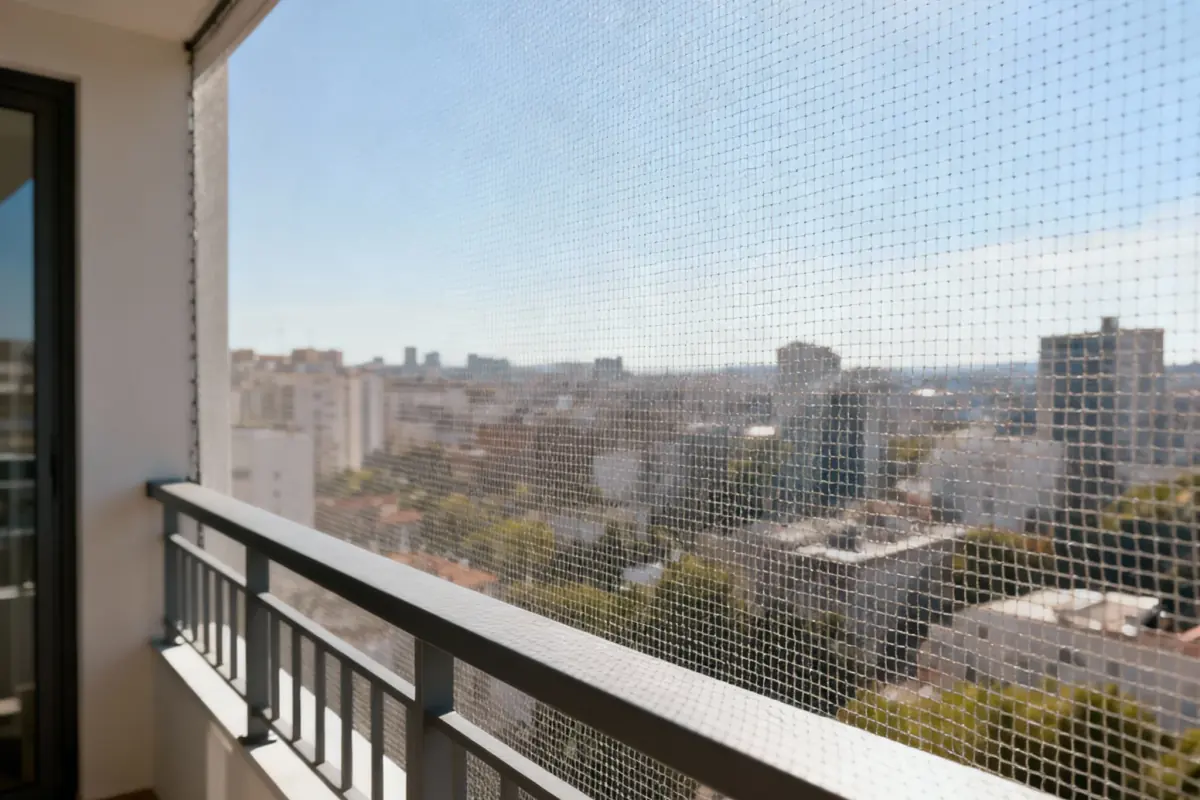
Severity is also influenced by who uses the home. Repeated droppings near a child's play area, elderly person's sitting space, kitchen utility zone, pet bowl or fresh laundry require faster action than a rarely accessed exterior ledge. Large communal shafts and building-wide roosts should be raised with the association because closing one flat may only redirect birds to the next opening.
3. Health and hygiene: take precautions without creating panic
Pigeon droppings are unpleasant, can stain finishes, and can create dust when allowed to dry and accumulate. Feathers and nesting debris may also block drains or collect around equipment. These are sound reasons to maintain a clean apartment. However, a trustworthy article should not imply that every pigeon visit causes serious disease. Public-health guidance notes that routine cleaning of a small amount of droppings, such as on a windowsill, is not considered a serious risk for most people when sensible precautions are used.
The concern increases when there is a large, old or enclosed accumulation that can be disturbed into airborne dust. People with compromised immune systems should avoid cleaning pigeon waste themselves. Large roosts, deep ducts, lofts, plant rooms or commercial sites should be assessed by trained cleaners who can control dust and dispose of waste appropriately. Anyone who develops breathing difficulty or illness after a significant exposure should seek medical advice rather than attempting to diagnose the cause from an internet article.
Do not dry-sweep a heavy accumulation. Keep people and pets away, avoid blowing dust with a fan or pressure jet, and use an appropriate professional service when the quantity or access makes safe cleaning uncertain.
Prevention is therefore valuable not because a balcony must be treated as a hazardous zone, but because stopping repeated roosting reduces the ongoing cycle of droppings, wet washing, odour, blocked drains and surface damage. A measured, accurate explanation builds more trust than exaggerated statements about disease.
4. Remove the reasons pigeons find the balcony rewarding
Physical barriers work better after the basic attractions are removed. Begin with food. Do not leave grain, bread, rice, pet food, compost scraps or open rubbish on the balcony. Check whether food is falling from a bird feeder on an upper floor or being placed on a shared terrace. Even when one household does not feed pigeons directly, crumbs beneath outdoor dining furniture or bowls left for pets can create a dependable source.
Next, remove water. Repair dripping taps, AC drain leaks and overflowing planter trays. Empty buckets after rain and keep floor drains clear. Pigeons do not need a decorative water bowl if condensation collects daily on a ledge. A dry balcony is less attractive and easier to maintain.
Finally, reduce shelter. Store cardboard boxes, unused pots, old furniture, coconut fibre, cloth and loose twigs indoors. Close deep voids behind cabinets while preserving required ventilation. Trim dense dead growth in balcony plants without turning the space into a bare area. The goal is to remove stable nesting pockets, not to eliminate healthy greenery.
Ten-minute attraction audit
- Look for grain, crumbs, pet food and open rubbish.
- Check AC drain pipes, taps and planter trays for water.
- Move empty boxes and unused furniture away from corners.
- Inspect behind outdoor units, shelves and washing machines.
- Clear nest-sized piles of twigs, cloth and dry plant material.
- Ask whether anyone nearby feeds pigeons from a balcony or terrace.
5. Decide whether the problem is entry, perching or nesting
This is the most important decision in the entire guide. A pigeon net and a bird spike do different jobs. Netting excludes birds from an opening. Spikes remove comfortable landing space from a narrow surface. Confusing these functions creates poor installations: spikes are placed on one railing while birds simply fly into the balcony, or a large net is fitted where a short row of spikes could have solved the only active perch.
Choose full-opening pigeon netting when birds cross the boundary and move inside a balcony, window recess, shaft, duct, utility area or roof pocket. Choose spikes when birds remain outside but repeatedly land on a sill, parapet, sign edge, beam, pipe or AC top. Use a combined plan when birds enter through the main opening and also sit on exterior ledges beyond it.
6. Pigeon prevention methods compared
| Method | Best use | Main advantage | Main limitation | Typical role |
|---|---|---|---|---|
| Pigeon netting | Balconies, windows, ducts, shafts and utility openings | Creates a dependable physical exclusion barrier | Must be accurately tensioned, sealed and maintained | Primary long-term solution for entry |
| Bird spikes | Narrow ledges, AC tops, parapets, beams and signs | Targeted and visually light when correctly selected | Does not stop birds flying into a wider opening | Primary solution for perching lines |
| Bird wire | Long, visible architectural ledges | Can be discreet on suitable straight surfaces | Needs accurate tension and may not suit complex ledges | Specialist anti-perching option |
| Sloped cover | Broad flat tops where a permanent angled surface is possible | Removes the flat landing platform | Custom fabrication and drainage details may add cost | Architectural modification |
| Reflective movement | Early, low-pressure activity | Low-cost and easy to test | Birds often become accustomed to predictable objects | Temporary support, not dependable exclusion |
| Scents or sprays | Short trials on small, washable surfaces | Easy to apply | Weathering, weak evidence, repeat application and staining risk | Minor supplementary measure |
A useful plan often combines environmental control with one physical barrier. For example, remove food and standing water, clean the balcony, then install a measured net. Adding several gadgets after the route is already physically closed usually provides no extra value. More products do not automatically mean better prevention; correct diagnosis and complete coverage matter more.
7. Pigeon safety nets: the strongest option for full openings
A pigeon net is a mesh barrier fitted around the perimeter of an opening so pigeons cannot enter, roost or build a nest inside. It is commonly used on apartment balconies, utility balconies, windows, AC recesses, ventilation shafts, service ducts, terraces with framed openings and selected commercial areas. Because air and light pass through the mesh, a well-planned net normally preserves the basic function of the opening better than a solid screen.
Effectiveness depends on the perimeter, not only the visible front panel. The installer should check the top slab, both side walls, lower railing zone, pipe passages, narrow returns, AC brackets and any gap between a grill and the building. Pigeons can use surprisingly small side routes when the main face is blocked. A cheap front-only installation can fail because the actual entry point remains open.
The net should be taut enough to hold its shape but not so aggressively tensioned that weak anchors, brittle plaster or old cladding are overloaded. Edge rope or cable must follow a clean line, and knots or clips should not leave loops that can snag birds. Where technicians need future access to an AC unit, drain line or planter, discuss a properly secured removable panel or zipper before installation. Cutting an improvised hole later weakens the barrier and creates a trapping risk.
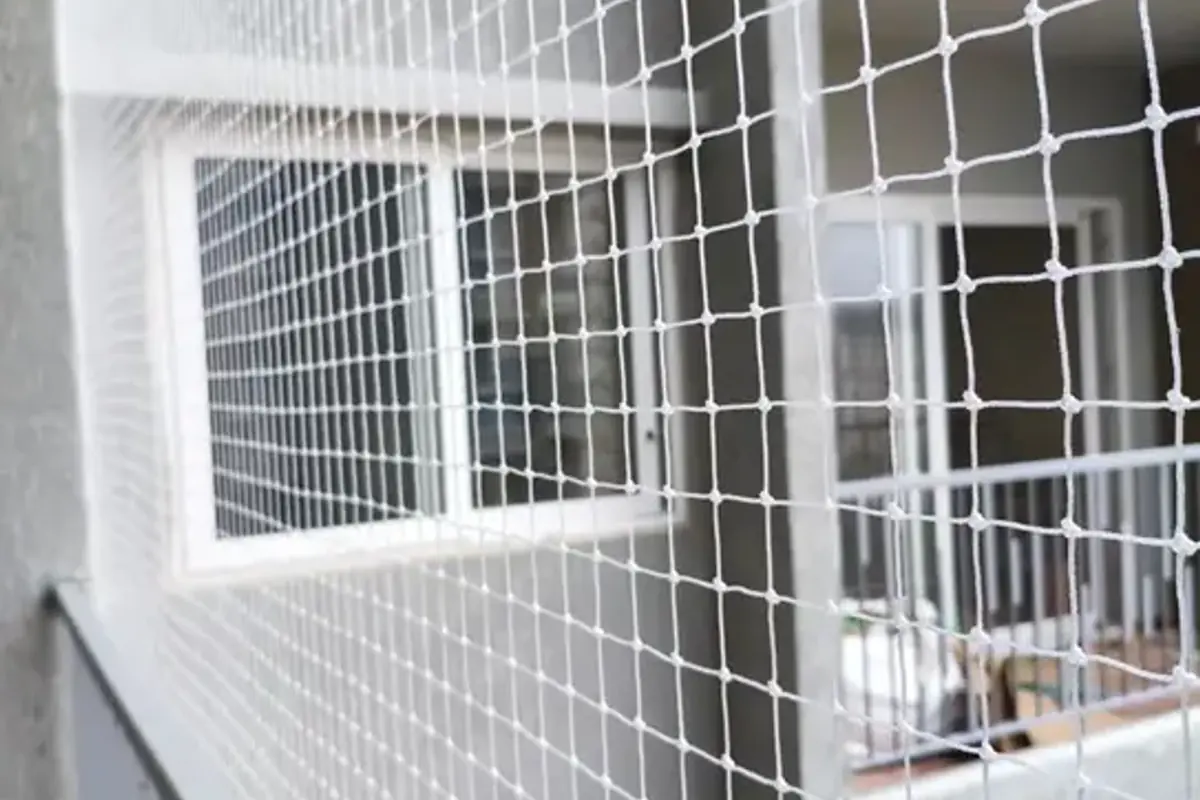
Properly constructed and maintained netting is a humane exclusion method because it prevents access rather than trapping or injuring birds. Poorly installed netting can do the opposite. Loose folds, torn sections, open tops and inaccessible spaces behind the net must be corrected quickly. Inspect the finished work from inside and, where safely possible, from neighbouring angles to confirm no bird has been enclosed.
8. Net material, mesh size, visibility and fixing quality
Product names are often used loosely. Sellers may describe nets as nylon, HDPE, polyethylene, copolymer, transparent, invisible, UV-treated or monofilament. Do not rely on the marketing word alone. Ask for the actual material, strand construction, mesh opening, colour, border method, expected outdoor use, warranty terms and replacement conditions. A transparent-looking strand can still be unsuitable if it becomes brittle in sun or if the perimeter hardware is poor.
UV-stabilised HDPE or suitable outdoor polymer nets are widely used because they are light, do not rust and can tolerate ordinary weather when correctly specified. Transparent or low-visibility options can reduce visual weight, especially against open sky, but every mesh becomes more visible when dust, rain droplets or backlighting catch the strands. Black or dark mesh may disappear better against a shaded interior, while pale mesh may suit a bright exterior. Ask to see a real installation in lighting similar to your balcony rather than judging a small sample held in the hand.
Mesh spacing should block the target bird without creating unnecessarily dense visual coverage. Pigeon-control netting is not automatically a child-safety or pet-safety system. Those applications may require different strength, edge treatment, spacing and load expectations. A provider should clearly state what the selected net is designed to do instead of claiming one light mesh is suitable for pigeons, children, cats, monkeys and construction safety at the same time.
Hardware matters as much as mesh
The most common failures occur at hooks, anchors, knots, corners and surfaces—not in the centre of an undamaged panel. Concrete, brick, metal frame, stone cladding, tile and weak plaster each need an appropriate fixing plan. Outdoor rope, stainless or corrosion-resistant hardware, sound plugs and neat spacing help the border remain stable. In a rental or façade-controlled building, discuss approved no-drill options, but do not assume adhesive alone is suitable for every high-wind opening.
9. Bird spikes: targeted prevention for ledges, sills and AC tops
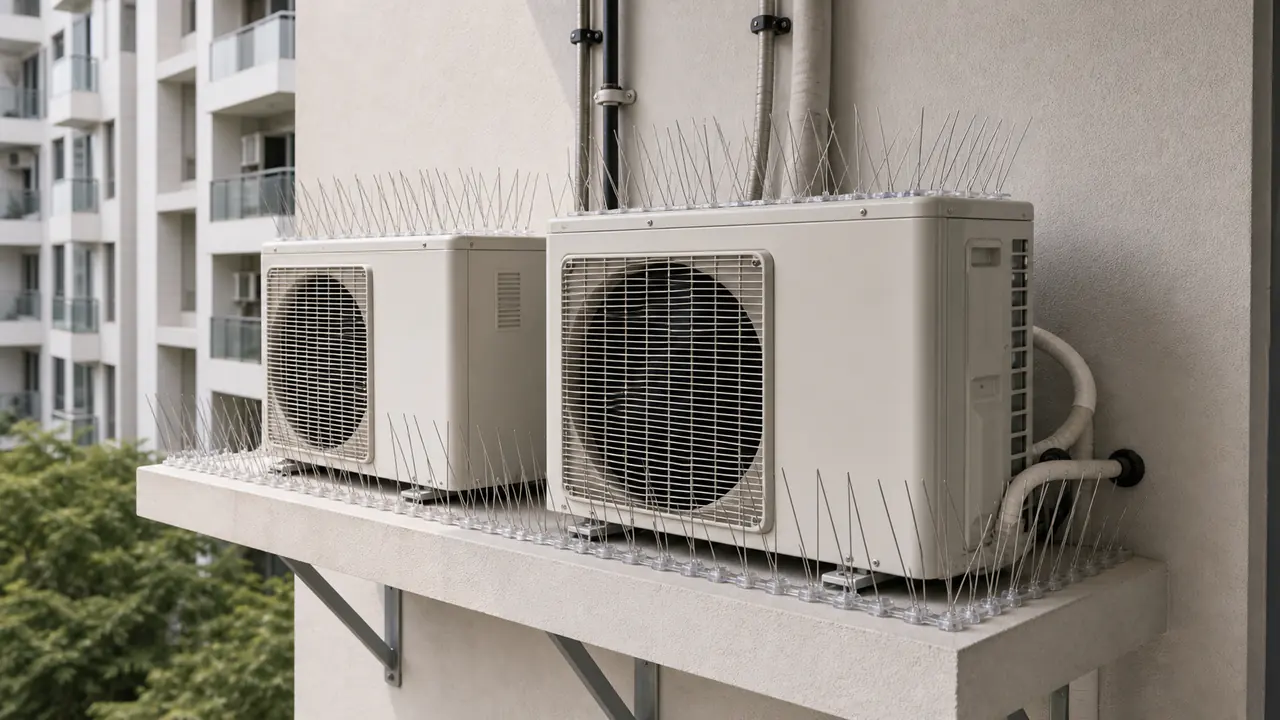
Bird spikes are rows of stainless-steel or polymer stems fixed to a base. Their purpose is not to pierce birds; correctly designed non-lethal spikes make a narrow surface difficult to land on. They suit window sills, parapet tops, AC platforms, beams, pipes, signboards and similar perch lines. They are not a substitute for netting when pigeons fly into the balcony or nest behind equipment.
Width is the critical measurement. A single narrow row fixed to the front of a deep ledge may leave a comfortable strip behind it. Pigeons then land between the spikes and the wall. The installer should measure both the running length and the full depth, select enough rows to remove all useful landing space, and cover corners or side returns. Nearby brackets, pipes and cable trays should also be checked because birds can move only a few centimetres to an untreated point.
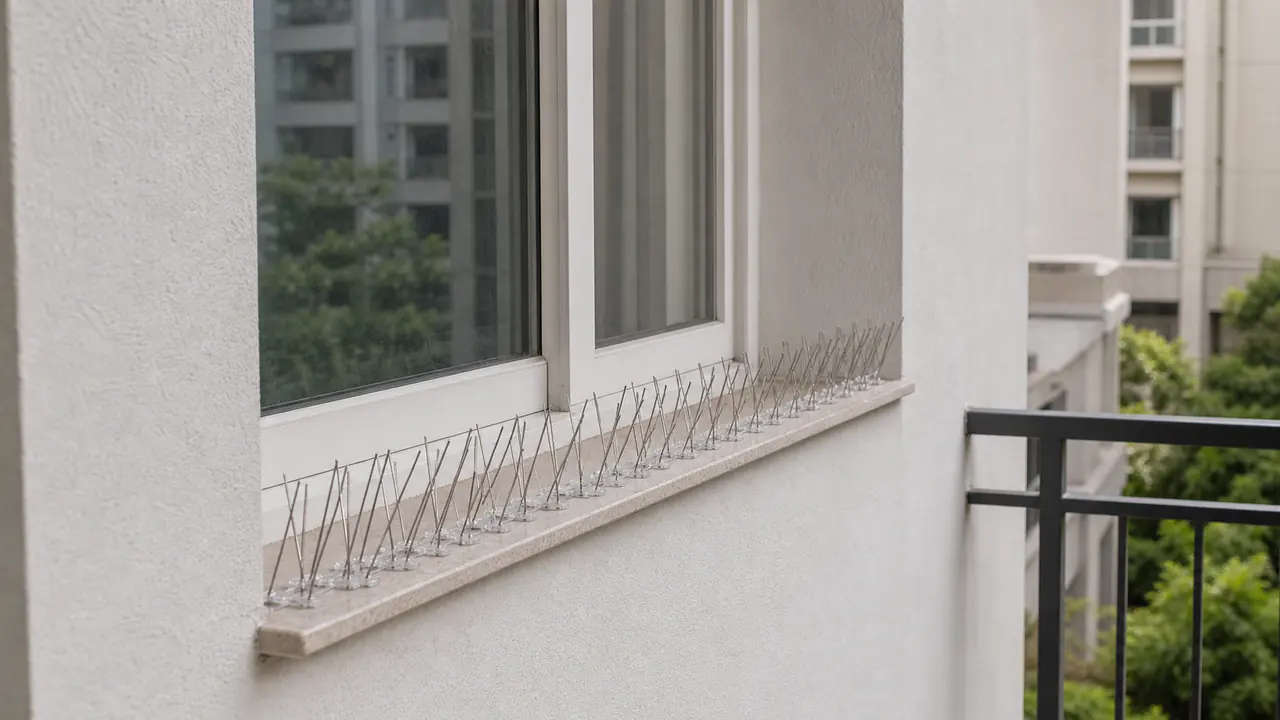
Fixing also changes with the surface. Mechanical anchors may suit sound concrete. Outdoor adhesive may suit tile, metal or a no-drill situation when the product and surface preparation are appropriate. Clamps or ties can suit selected pipes and frames. The base should remain stable through heat, rain, cleaning and building maintenance. For AC units, keep air intake, discharge, drainage and service panels unobstructed. Never push spikes into a position that makes technicians unable to maintain the equipment safely.
Explore the difference in greater detail on EverSafe's bird spikes installation guide.
10. Bird wire, angled covers, screens and architectural changes
Some buildings need a solution other than standard mesh or spikes. Tensioned bird wire can discourage landing on long architectural ledges while remaining visually light, but it requires accurately spaced posts, stable tension and a surface suitable for fixing. It performs poorly when sagging, when the ledge is too deep for the selected layout, or when nearby untreated surfaces remain available.
Sloped covers convert a flat ledge into an angle on which pigeons cannot comfortably stand. These can be fabricated from suitable metal or other durable exterior material. They are useful on broad parapets, equipment housings and sign tops, but the design must consider drainage, waterproofing, expansion, wind and access. A badly designed slope can trap rubbish or direct rainwater toward the wall.
Rigid mesh screens may suit vents, plant rooms and utility apertures where a flexible net would interfere with equipment. Brush strips or closure panels can seal narrow gaps under roof sheets. Solar-panel perimeter mesh can reduce access beneath panels without placing sharp material where it could damage cables. These are specialist details: confirm ventilation, electrical clearance, fire safety and service requirements before enclosing mechanical or electrical equipment.
11. Reflective tape, moving objects and decoys: useful but temporary
Shiny tape, rotating reflectors, old CDs, pinwheels, streamers and moving ornaments can make a new balcony feel unpredictable. They may help during the earliest stage, especially when the birds have not yet formed a strong habit. Their weakness is predictability. A stationary owl or a reflective strip that moves in the same way every day soon becomes part of the environment. Pigeons may initially avoid it, then return after learning that it presents no real barrier.
Use these items as a short experiment while removing food and arranging a permanent solution. Move decoys frequently, avoid objects that can fall from a high-rise balcony, and consider noise for neighbours. Wind chimes and flapping tape can become more annoying to residents than to birds. Do not attach loose fishing line or poorly visible strands across an open route; they can entangle wildlife and create a hazard for people.
Best expectation: visual deterrents may interrupt occasional landing. They should not be presented as a guaranteed solution for established roosting or nesting.
12. Scents, sprays, gels, predator sounds and ultrasonic devices
Online advice often recommends vinegar, chilli, pepper, cloves, essential oils, commercial repellent sprays or sticky gels. Strong smells may make a small area temporarily less appealing, but rain, sunlight, cleaning and airflow quickly change the effect. Some products can stain stone, damage paint, irritate people or pets, attract dust, or create a sticky surface that harms small birds and insects. Never spray chemicals toward birds, nests, food areas, AC intake or neighbouring balconies.
Sonic devices play distress or predator calls. Ultrasonic devices claim to emit sound above normal human hearing. Performance varies with species, building shape, competing city noise and whether the birds can see that no predator is present. Sound also travels beyond the target area and may disturb neighbours or pets. These devices are better treated as supplementary experiments than as the main defence for a physical opening.
Lasers, electric tracks and professional hazing systems may have roles in large commercial, agricultural or industrial settings, but they are rarely the first choice for an ordinary apartment. They require specialist assessment and responsible operation. For homes, a clean space plus a correctly chosen physical barrier is usually simpler to explain, inspect and maintain.
13. How to clean pigeon droppings more safely
Cleaning should remove contamination without creating a cloud of dry dust. For a small routine windowsill or balcony clean-up, keep children and pets away, wear disposable gloves and washable clothing, and avoid touching your face. Lightly wet the droppings with water and an appropriate household cleaning solution so they can be lifted rather than swept dry. Use disposable towels or a controlled scraper, place the waste in a sealed bag, and wash hands and exposed skin thoroughly after finishing.
Do not mix cleaning chemicals. In particular, never combine bleach with acids, ammonia or unknown products. Protect painted, stone, metal and fabric surfaces by testing a small area first. Avoid sending dirty water over the balcony edge, into a neighbour's property or across a façade. Do not use a high-pressure jet on dry material because it can spread contaminated droplets and force water into wall joints, windows or electrical equipment.
Stop and call a specialist when the waste is deep, widespread, inside an enclosed shaft, associated with many nests, difficult to reach safely, or likely to be disturbed into airborne dust. People with weakened immunity should not perform the clean-up. Follow local waste and building rules for disposal. Cleaning and exclusion should be coordinated: if the area is cleaned but the entry route remains open, the same work may be required again within days.
Authoritative public-health guidance recommends professional removal for large accumulations and sensible protective measures for smaller routine clean-ups. Source links are included at the end of this article.
14. What to do about active nests, eggs or trapped birds
Never seal a net while a bird, egg or dependent chick remains inside the protected area. An installer should inspect shelves, ducts, AC recesses and hidden corners before closing the perimeter. If adults repeatedly enter a corner, observe whether they are feeding young rather than assuming the nest is abandoned. Removing an active nest may be regulated, and the appropriate response can vary by location and species.
Contact a local wildlife rescue organisation, animal-welfare professional or competent authority when a bird is injured, trapped or caring for young. Do not attempt risky high-rise rescue work from the outer side of a balcony. Do not cut a large uncontrolled opening in installed netting without a plan, because additional birds may enter or the damaged edge may create more entanglement.
Humane timing is part of good prevention. Once an area is confirmed clear and lawful work can proceed, remove nesting debris, clean the site and close every route in one coordinated visit. Leaving one open side encourages the birds to rebuild immediately.
15. Apartment association, rental and façade rules
A balcony may be privately used while the outer façade remains controlled by the apartment association. Before drilling, ask whether the building specifies net colour, hook spacing, approved vendors, installation hours, worker documentation, rope-access permission or a standard fixing line. Some communities allow netting only inside the railing or require a uniform appearance from outside.
Tenants should obtain the owner's written approval and clarify who pays for removal when the tenancy ends. Owners should record existing cracks, loose plaster and waterproofing before work begins. For high-floor exterior access, the contractor should follow the building's safety requirements and use trained personnel with suitable equipment. A low quotation does not justify unsafe work from an unprotected parapet or improvised rope.
Resident welfare associations can often solve pigeon pressure more effectively at building level. Shared rules on feeding, rubbish, terrace cleaning, duct closures and approved deterrents reduce the chance that birds simply shift between flats. Local public-health and municipal rules can change, so check current requirements rather than copying an old society circular.
16. DIY versus professional pigeon prevention
DIY work may be reasonable for a small ground-floor window, an internally accessible ledge or a temporary visual deterrent. It becomes unsuitable when the installer must lean beyond a balcony, climb an unprotected ladder, reach an exterior façade, work near power cables, enter a deep shaft, or drill into an unknown waterproofing system. The cost of professional work includes access planning and finishing, not only the net.
DIY kits often provide a rectangular panel, a small number of hooks and cable ties. Real balconies contain pipes, curved edges, side returns, rail gaps and weak surfaces. Too few anchors create large unsupported spans; too many careless holes damage finishes. Cable ties exposed to sun may become brittle unless specified for outdoor use. A loose panel can flap, rub against sharp metal and create openings.
A professional service should measure the actual opening, explain the material, identify safe fixing surfaces, plan future access and provide a clear written estimate. Professional does not mean automatically excellent. Ask the same questions of every provider, inspect the finish and keep photos of the completed work.
17. What a professional pigeon-net installation should include
Bird-route inspection
The installer checks droppings, feathers, nests, landing points, side routes, AC access, drainage, active birds and the way the balcony is used.
Accurate measurement
Width and height are measured for every face. Returns, recesses, windows, ducts and small pipe gaps are itemised instead of guessed from floor area.
Material and fixing plan
Net type, colour, mesh, border rope or cable, anchors, removable access and exposure are confirmed before work begins.
Perimeter preparation
Sound fixing points are marked. Loose surfaces, active nests and obstructions are addressed rather than covered over.
Panel fitting and tensioning
The mesh is aligned, tensioned evenly and closed at corners without folds, large loops, sharp rubbing points or unplanned gaps.
Handover and inspection
The customer checks the perimeter, cleaning access and visual finish. Warranty scope and maintenance responsibilities are explained in writing.
Small, safely accessible balcony openings may be completed in one visit. Multi-face balconies, deep ducts, high exterior access, custom supports and building-wide work require more planning. Do not rely on a universal promise such as “30 minutes for every balcony.” The time should match the site.
18. Pigeon prevention price: what changes the final estimate
Pigeon net pricing is commonly calculated from the fitted vertical area, not the balcony floor area. A front opening measuring 10 feet wide and 8 feet high is about 80 square feet before side returns, lower gaps or separate windows are added. Small jobs can have a minimum charge because travel, drilling, setup and finishing are required even when the measured area is low.
EverSafe's current Bangalore planning guide lists approximately ₹15–₹35 per square foot for many ordinary residential pigeon-net installations. A simple accessible opening can sit near the lower end, while side returns, deep ducts, multiple corners, high-floor access and custom support can move the quote upward. This is a local planning guide, not a universal India tariff; request a measured estimate for the actual city and opening.
| Cost factor | Why it changes the quote | What to ask |
|---|---|---|
| Measured opening | Front face, side returns, windows and ducts add separate fitted area | Show width × height for every section |
| Material and visibility | Mesh type, strand, UV specification and border system differ | Name the material and included hardware |
| Access and floor height | Safe exterior access, ladder, scaffold or rope work adds labour and planning | Explain how the team will work safely |
| Surface condition | Weak plaster, tile, cladding or metal frames need different fixing | Confirm the anchor method and repair exclusions |
| Special shaping | Pipes, AC units, curved corners and removable panels require detail work | Show which gaps and access panels are included |
| Cleaning and old-net removal | Waste handling and removal can be separate services | Ask whether cleaning, disposal and taxes are included |
Bird spikes are usually priced by running length, ledge width, number of rows, material and access rather than by square foot. Compare total scope, not the lowest headline rate. A narrow single row is not a bargain if the ledge needs three rows to remove all landing space.
19. Maintenance: the step that keeps prevention humane and effective
No outdoor system should be treated as permanently maintenance-free. Inspect a pigeon net every few months and after severe wind, exterior painting, AC servicing or building repair. Look for loose anchors, broken ties, sagging corners, abrasion against metal, cut sections, accumulated leaves and any gap that a bird is testing. Check from inside the balcony; do not lean outside to inspect.
Wash light dust with controlled water and a soft method suitable for the material. Avoid harsh solvents, flame, sharp brushes and pressure jets. Keep floor drains and access panels clear. If a panel is removed for painting or AC work, arrange proper refitting rather than tying it back with temporary household string.
Spikes need inspection too. Leaves, plastic bags and nesting material can collect between rows and create a new platform. Adhesive can release from dusty tile; bases can lift after façade work; metal pins can bend under careless cleaning. Replace damaged sections and restore full-width coverage. Maintenance protects both the home and the birds by preventing entanglement or partial access.
Simple maintenance calendar
- Monthly: visually check for birds testing gaps and remove loose debris.
- Every three to six months: inspect tension, anchors, edge rope and rubbing points.
- After storms: check corners and large exposed spans.
- After AC or painting work: confirm the barrier has been fully restored.
- Immediately: repair any tear, trapped debris, loose spike base or bird-entanglement risk.
20. Monsoon rain, coastal air, sunlight and high-floor wind
Indian apartments experience very different exposures. A shaded utility balcony in Hyderabad does not face the same conditions as a sea-facing tower in Visakhapatnam or Chennai, or a high open balcony in Bengaluru during gusty monsoon weather. The material and fixing method should reflect actual exposure, not only city name.
In strong sun, low-quality polymer can become brittle and ties can fail. In coastal air, ordinary metal hardware may corrode faster; appropriate stainless or corrosion-resistant components and periodic checks become more important. During monsoon, loose netting can flap, rub against corners and hold wet leaves. Drainage paths must remain open, and the border should not channel rainwater into wall cracks.
High-floor wind does not automatically require the thickest possible mesh. It requires sensible panel size, perimeter support, suitable anchor spacing, sound substrate and a design that does not leave oversized loose spans. Ask the installer to explain the fixing logic instead of accepting unsupported phrases such as “windproof forever” or “unbreakable.”
21. Pigeon nets are not automatically child-safety or pet-safety nets
A light pigeon-control net is designed to exclude birds. It should not be assumed to support a child leaning, a cat climbing, a dog pushing or an adult falling. Homes with multiple concerns need a specification based on the highest risk. The installer may recommend a stronger safety net, closer edge treatment, different mesh, reinforced perimeter or an invisible grill system, depending on the opening and use.
Parents should maintain a sound railing and active supervision. Move climbable furniture, planters and toy boxes away from the edge. Pet owners should consider chewing, clawing, body size and whether a cat can climb the mesh. No net should be marketed as a replacement for responsible supervision, structurally sound railings or building compliance.
Ask the provider to write the intended purpose on the estimate: “pigeon exclusion,” “child-safety net,” “cat-safety net,” or a combined engineered solution. Clear naming prevents unrealistic expectations later.
22. The right pigeon-prevention solution for each apartment area
Balcony opening
Use a full-opening net when pigeons enter the usable balcony. Close the front, side returns, top corners and railing gaps while preserving doors, drains and daily movement. Plan a removable access section for equipment only when it can be securely closed after use.
Window sill or chajja
Use spikes or bird wire when pigeons only sit on the external sill. Use a net or rigid screen when they enter a deep recess. Confirm that the solution does not obstruct window operation, emergency access or drainage.
Outdoor AC unit
Spikes can discourage landing on the top or surrounding platform, while netting can close a larger AC recess. Preserve airflow, pipe routes and technician access. Never attach material to moving fans, electrical parts or heat-discharge paths.
Utility balcony
Utility spaces often contain washing machines, gas lines, exhaust outlets and drain pipes. Use a custom-shaped net that closes bird routes without touching hot exhausts or blocking ventilation. Protect laundry from droppings and keep enough internal clearance for appliance service.
Service duct or shaft
Deep shared ducts can hold multiple nests and heavy waste. Coordinate with the association and inspect several levels. A single-flat patch may not address the main top entry. Large shafts need safe access, durable perimeter support and a plan for future building maintenance.
Terrace and parapet
Spikes suit narrow parapet tops; net frames or wires may suit defined roof pockets. Completely open terraces rarely suit a casual piece of balcony mesh because span, wind and maintenance are different. Protect water tanks, solar equipment and drains without creating an obstacle for emergency access.
Solar-panel area
Pigeons may nest beneath raised panels. Specialist perimeter mesh can close the lower gap while preserving ventilation and avoiding cable damage. Work around solar systems should be coordinated with qualified technicians and the panel warranty requirements.
23. Common mistakes that allow pigeons to return
- Blocking the visible front but leaving side gaps. Birds follow the remaining route, especially around pipes, railing returns and AC brackets.
- Installing spikes that are narrower than the ledge. The birds land behind or beside the row.
- Leaving food and water available. The balcony remains rewarding even when one perch becomes uncomfortable.
- Using loose netting. Sagging creates gaps, looks untidy and can trap birds or debris.
- Sealing an active nest. This is inhumane and can create odour, insects and trapped animals.
- Believing one decoy is permanent. Pigeons learn that a stationary plastic predator does not move or attack.
- Choosing only by the lowest rate. Material, access, perimeter closure, hardware and warranty may be excluded.
- Cutting the net for AC service. An improvised opening becomes the new bird route and weakens the whole edge.
- Ignoring maintenance. Painting, wind and cleaning can loosen a system that initially worked well.
- Calling every mesh a safety net. Pigeon exclusion, child safety and pet safety have different performance expectations.
24. A practical seven-day pigeon-prevention plan
Day 1: observe
Record where birds first land, where they enter, and when they visit. Photograph every corner.
Day 2: remove rewards
Remove food, water, boxes, twigs and quiet nesting pockets. Speak to household members about feeding.
Day 3: clean carefully
Dampen and remove small routine waste safely, or arrange professional cleaning for heavy accumulation.
Day 4: classify
Decide whether the problem is entry, a narrow perch, an active nest or a building-wide roost.
Day 5: check rules
Obtain association or owner approval and confirm the safe access method.
Day 6: compare scope
Compare measured estimates, materials, hardware, access, cleaning and warranty—not just the rate.
Day 7: install and inspect
Confirm the area is bird-free, close all routes, inspect the finish and schedule maintenance.
The timetable can be shorter for a simple opening or longer when active nests and association permissions are involved. Its purpose is to prevent rushed installation without diagnosis.
25. Example: solving a typical high-rise balcony problem
Consider a family balcony with a glass railing, one open side return and an AC unit in the corner. Pigeons first land on the outer railing, then step onto the AC platform and move behind the unit. The family cleans the floor every few days, but the birds return because the corner remains dry and the AC drain provides water.
A complete response begins by repairing the drain route, removing stored cardboard and cleaning the corner. The main balcony face and side return are measured. Because birds move inside, a full-opening net is selected rather than railing spikes alone. A securely closable access detail is planned for AC servicing. The perimeter follows sound slab and wall points, with no gap behind the pipe.
After installation, the family checks the edges from inside, confirms the door and drain still work, and records the warranty and maintenance contact. Spikes may be added outside the net only if birds continue to foul a separate ledge. This example shows why diagnosis saves money: the solution addresses water, shelter, entry and future access instead of adding unrelated gadgets.
26. Pigeon-net and bird-spike buyer checklist
- What exact problem is being solved: entry, perching, nesting or several of these?
- Which openings, side returns, pipes, ledges and lower gaps are included?
- What is the actual net or spike material and outdoor specification?
- How is the job measured and which price unit is used?
- What fixing method suits concrete, tile, metal, cladding or weak plaster?
- How will the installer work safely at this floor and access point?
- Is cleaning, old-net removal, waste disposal and tax included?
- Will AC service, drainage, windows and balcony doors remain practical?
- Has the team checked for active nests, young birds and trapped animals?
- What written warranty is provided for mesh, hardware and installation?
- Who will repair a torn panel or loose anchor, and is there a call-out fee?
- Can the provider show a real installation with a similar opening?
A good estimate makes the scope understandable before work begins. It should not hide behind phrases such as “premium quality,” “lifetime,” or “best price” without naming the material, unit, included work and limitations.
Frequently asked questions about pigeon prevention
1. What is the most effective way to keep pigeons away from an apartment balcony?
When pigeons enter the balcony, a properly measured and maintained pigeon net is usually the most dependable solution because it physically closes the route. Remove food, water and nesting material first. If pigeons only sit on one narrow exterior ledge, correctly sized spikes may be sufficient.
2. Will a pigeon net block airflow, sunlight or the balcony view?
Most open mesh allows substantial airflow and daylight. Visibility depends on strand thickness, mesh size, colour, lighting, dust and viewing distance. Low-visibility options can reduce visual impact, but no physical mesh is completely invisible in every condition.
3. Are bird spikes harmful to pigeons?
Properly designed non-lethal spikes are intended to remove comfortable landing space rather than injure birds. They must cover the full ledge depth, be securely fitted and be inspected regularly. Improvised sharp objects, broken strips and poor placement should not be used.
4. How much does pigeon-net installation cost?
Cost depends on fitted area, material, corners, access, surface, floor height, cleaning and special shaping. EverSafe's current Bangalore guide is roughly ₹15–₹35 per square foot for many standard residential situations, but the final price must come from measurement and local service scope.
5. How often should pigeon nets and spikes be inspected?
Perform a quick visual check monthly and a closer check every three to six months. Inspect immediately after strong wind, exterior painting, AC servicing or any event that may cut, loosen or move the system. Repair damage before birds begin using the gap.
6. Can the same net protect against pigeons, children and pets?
Do not assume so. A pigeon-control net is designed for bird exclusion and may not be intended to carry impact or resist climbing and chewing. Tell the installer every requirement so the material, mesh, fixing and perimeter can be specified for the highest household risk.
Need a measured pigeon-prevention plan for your apartment?
Send EverSafe one clear photo of the full opening, closer photos of the top and side fixing surfaces, your city or area, and whether pigeons are landing outside or entering the balcony. That information is enough to begin comparing a pigeon net, bird spikes or a combined solution.
Editorial and safety references
This guide uses a balanced prevention approach. For health and humane-handling details, consult: NYC Health pigeon cleaning guidance, CDC guidance on reducing exposure during large bird-dropping clean-ups, and RSPCA guidance on humane pigeon deterrents. Local laws, building rules and health advice may differ.
EverSafe Safety Nets: eversafesafetynets.com. Phone: +91 80748 38518.


Comments
Post a Comment